
A Tale of Two Jerseys
It feels quite rare to see two sides of the story so completely side-by-side. Such was the case when I recently watched AIK Stockholm v Vittsjo GIK in the Damallsvenskan. How money gets into women’s sport, and how that impacts on the culture of the game, is a burning question, so to see two very different approaches to funding manifest so clearly was eye-opening.
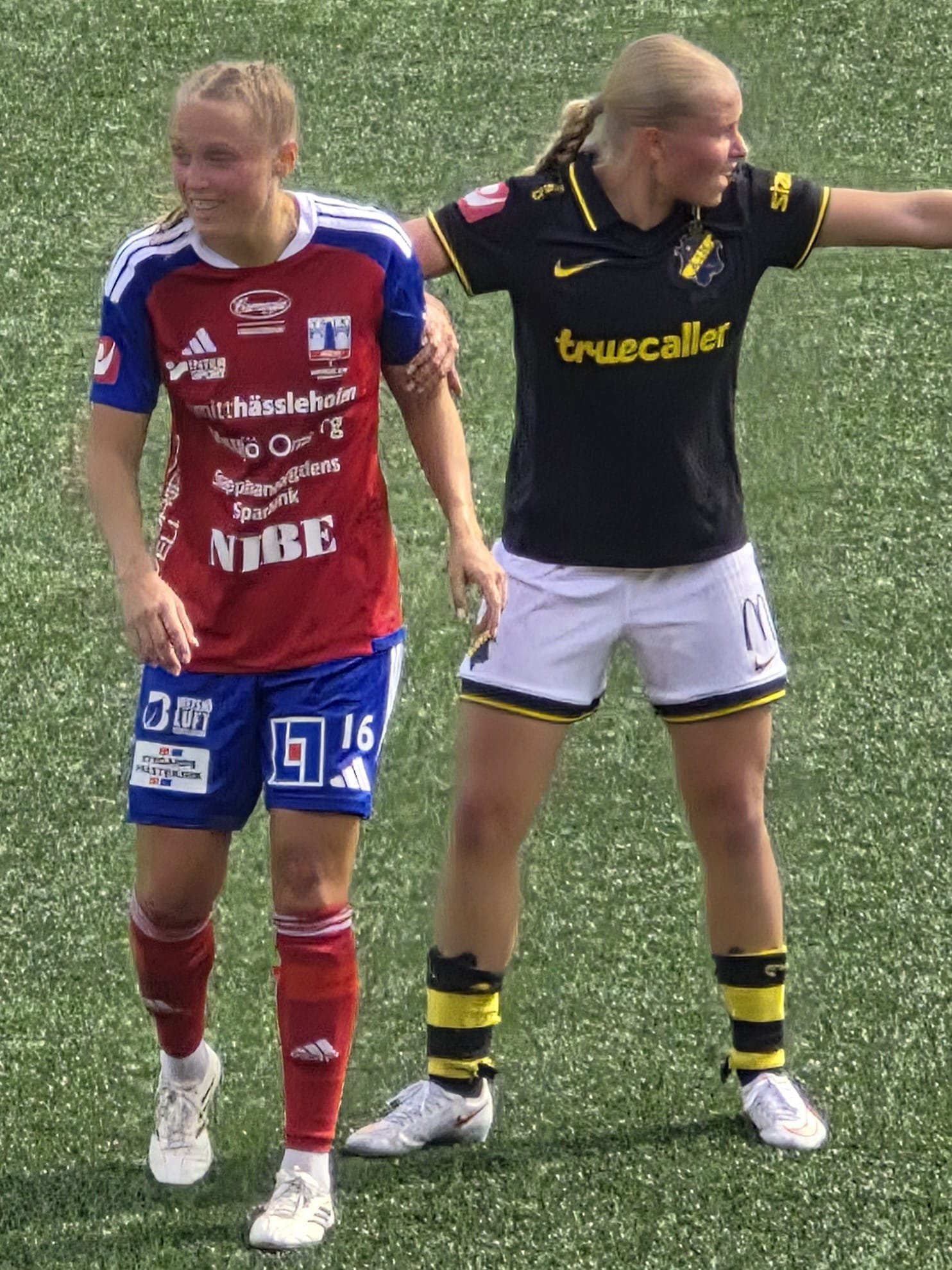
AIK v Vittsjo - August 15
The stark black with yellow trim, intrinsically linked to AIK and celebrated by the ‘Black Ladies’ banners across the fences, against the red and blue of Vittsjo, festooned in partner logos. I counted nine sponsors on the front and side panels, and a further two on the back of the away team’s kit. That’s a lot for a football kit, perhaps more of a norm in motor sports or the travelling billboards of grand tour cycling jerseys, but a helluva lot for a football kit.
My initial reaction was an instinctive ‘woah!’, borne out of how in football, rugby, and the major US sports, the jersey is a sort of sacrosanct space, above the melee of commercial jostling for position that happens across the rest of a club’s real estate. And then of course it lands. AIK, despite being one of Sweden’s biggest clubs, playing in the nation’s capital on a weekend their partner (parent?) men’s team were away, were playing on an outground a few kilometres down the road , at the home of Vasalund FC, currently lower mid-table in Tier 3 North of the Swedish men’s pyramid. And while the AIK staff did a great job in dressing it up for their visit, the facility doesn’t belong to them. Not owning the ground is a common feature and cap in women’s football. And Vittsjo are part of that band of teams across Europe.
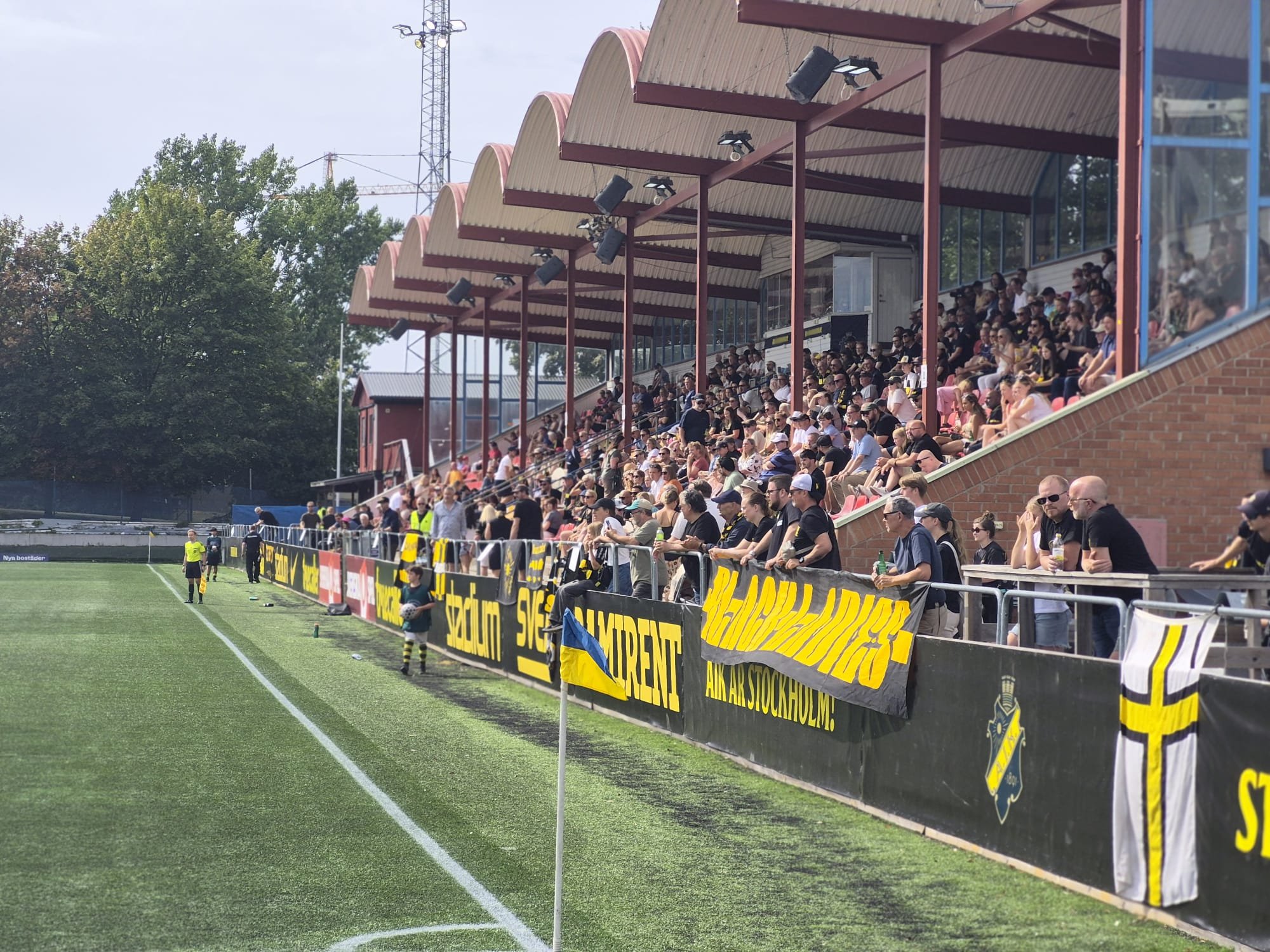
Skytteholms IP - ‘home’ from home of AIK Stockholm Women
While Vittsjo sold and now rent their ground from their municipality to de-risk their finances and licence for Damallsvenskan, they, and so many other teams still need to make the balance sheet, well, balance. AIK are able to rely on the support of the parent organisation, but for independents it’s a different story, and so we see Vittsjo GIK using their most valuable asset as a commercial canvas. I like a plain jersey, like most fans I guess, but I like having a club to support even more.
A little bit more of a dig into it, and you see the big majority of the brands buying their bit of space on the FC Vittsjo kit, are local brands, businesses and tourist boards,0
at which point what starts out as a commercial necessity, and aesthetically a bit iffy let’s be honest, becomes an expression of regional pride, and of how the independent women’s team going toe-to-toe is a standard-bearer for the region on a national stage.
For all of my own sensibilities around what should go on a kit, the small band of FC Vittsjo fans, at least some of whom will have made the 1000km round trip for the fixture, proudly wearing their club replicas on their day out in the capital, suggests that FC Vittsjo have struck the right balance between squeezing the pips on the stuff they own, and still making it feel like an expression of proud identity for their fans.
Women’s football, and a lot of women’s team sports more broadly, are having to walk a tricky path of nurturing the cultural relevance that has fuelled growth, enabling new fans and fans crossing from the men’s games, to come as they are and develop the habits that will sustain the game. They need to do this while also opening up to new revenue streams, enabling better product off the pitch, and ultimately better product on it - and do all of this while being held to a different standard to the business of men’s team sports, where the leash is a lot longer. I hear and we often talk of not needing to do things as they have always been done. For independent clubs beating a path shaped by their own values, this is perhaps more an imperative than an ambition, and it was fascinating to see how an independent club from provincial Sweden were going about building their future.